

re: conscientious knowledge
On how information turns into knowledge, and how this helps us make decisions in the age of AI.

Note: The nature of this letter is not my usual flavor. After making a series of Stories on Instagram on this topic inspired by a post by @iamsheo on how AI companies are "buying pre-1990s books, ripping their bindings and scanning them for data", multiple people have asked for this to be posted on Substack. It’s something I often do on Instagram Stories (open thoughts / dumps from a growing understanding of the multitude of disciplines I've studied, worked with or continue to learn about), and I’ve enjoyed the practice of translating it into an article.

That said—thank you for being here. I’ll leave you with your letter now. 🐞
What even is Knowledge?
Without attempting a deeper philosophical breakdown1 of the meaning of the word, back in Computer Science studies2 (almost 15 years ago now, back when we still used to write code exams on pen & paper), there’s were two main things we learned about data.
There’s:
Raw Data = Information
Things like your name, star sign, date of birth, how tall you are, if you can read or write, if you have children, have pets, live alone, are gluten-intolerant or anything that can be easily stored & categorized in some way.
Think: Bureaucracy, filling up forms, creating a new profile somewhere.
Processed Data = Knowledge
Things like you being tall enough to have common back problems, you love spending time reading up on your astrological sign, you like watching gluten-free cooking videos, you tend to share parental advice with your friends, you like to repost cute pet content…
Think: “the algorithm”, your FYP, any app trying to sell you something or that has ads.
This is what in the digital industry is called Knowledge —and this is directly used to make decisions about… well, everything. Including (and especially) how to speak to you, what to show you, or how to get & keep your attention.
Why?
This is where the post that inspired this thought process becomes incredibly relevant. As humans, we’ve invested entire lifetimes gathering Information and combing it for Knowledge.
We’ve dedicated our lives to reading and writing about patterns we spotted in the world, and how that would best inform our future decisions as a person, a community, country, or even SPECIES. Our Intentions were to perhaps understand, learn, grow, help, make our lives easier and more equal for all.
Digitising Information helped us because it made extracting Knowledge easier. We no longer had to dedicate our lives to it—we could study it for a portion of it, or use many digital tools to get to the Knowledge quicker, so we can make decisions faster… Information became available across borders, globally, so easily accessible it felt impossibly convenient.
It was a dream that many of humanity’s first biggest thinkers could not have imagined. Their dream of infinite information and knowledge to unlock the best in humanity, reveal truths that bring people & nations together, or help us grow consciously… what an incredible feat of humanity, right?
Well, somewhere along the line our main global Intentions shifted from these big dreams, to the goal of Consumption.
Where your attention goes, your energy flows. Your money flows. Your decisions flow.
You buy the $1 thing you saw the other day because it suits your needs & person… which the tool knows about you, and maybe 10 million other people. 10% of you are likely to buy it.
That one piece of Knowledge makes someone $1 Million with a click.
The problem we see with AI today is not the tool per se—it’s the INTENTION of the people who created it.
They have created a hunger for something that can never be satisfied, towards one goal: CONSUME.
Not to UNDERSTAND. Not GATHER. Not BRING TOGETHER. Not to HELP. Not to EMPOWER. Not to SUPPORT.
All this to illustrate the point here… these conglomerates are going back to 1900s because they need more reliable information about humans & the world, not something that was created by AI (aka “slop”).
They need reliable data.
What for?
This is the question we should really be asking. The act of gathering and processing information itself is not inherently evil, but the WHY will dictate the decisions made, and HOW they affect us as a species and the planet we inhabit (building data centers to keep up with the estimated “demand”, excessive usage of water, regarding other member of their own species as “lesser” than the tools we’re building).
Whhich is why, I feel it so important to say this: stay mindful & conscious friends, your bodies and minds are your own responsibility. This is important.
Make your own decisions, with complete agency. Stay aware & mindful of yourself, your people, your communities.
Keep that local knowledge alive in you. Make sure in this haze we’re in, that you’re staying connected to yourself & to each other.
And if that encourages you to start a PHD—all the more power to you. Or write a book. Or journal. Or send letters. Do it with being mindful of your intentions, and keep them healthy, keep them good. This is how we start making a difference. This is an invitation for you to practice your right to protect conscientious knowledge.
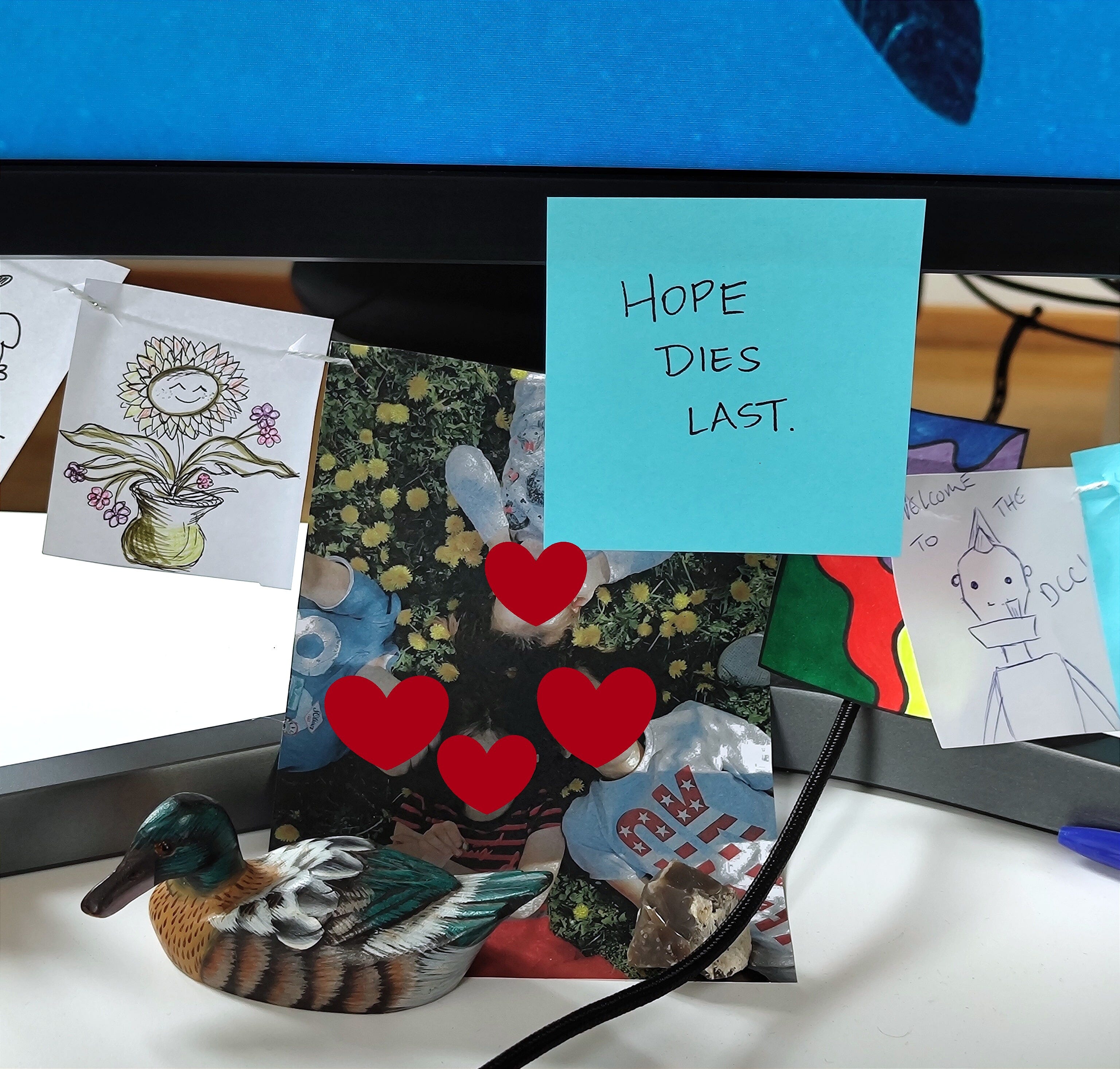
At least, this is the hope. And we say where I’m from: shpresa vdes e fundit.
Dashni,
Bubamarrë 🐞
Reddit posts can be quite illuminating. A friend of mine keeps referencing Reddit as a reliable source and I must say, it rarely disappoints.
Some interesting deeper reads on Data:
The United Nation’s Handbook on Management and Organization of National Statistical Systems.
For a completely different take and for some mental gymnastics, here’s a cross-discipline/industry breakdown of how data is gathered, processed & understood in the medical field: Data, Information, and Knowledge by Stephen M. Hewitt.
Thank you for sharing this; it really resonates ❤️
♥️