

re: patience
on waiting for the other shoe to drop, and taking care of one's needs.

Content Warning: This post is one of my most personal pieces yet. It speaks of perimenopause, body dysmorphia and queerness, and grapples with a history of self-abandon. Proceed with awareness of your heart and feelings, pause when you need. Take care of yourselves, always.
“So, how does it look, everything good?”
“Yes, Miss, the results are fine. But—this number here, I circled it, is the Anti-Müller Hormone. This one is at 0.56, extremely low for your age.” She shrugs and tightens her lips. “It happens.”
“So what does this mean?” And what exactly did I do wrong, I wanted to ask.
“It means that if you want biological children, the time is now.”
She looked me right in the eye, with what seemed like sympathy. I felt something inside of me tremble, crumble under the weight of that look. I wanted to burst out crying. I wanted someone to hold my hand and undo my stoic facade. I wanted my mother to have been there to hold me, though I know she would have told me that I did this to myself. “Tsk, it’s too late. I told you, you wasted your—”, a delayed echo in the back of my head persisted.
I focused instead on my quivering lip, and let that one stubborn tear fall off the corner of my eye. What was I even doing in this room? What was I trying to achieve? Does this person not understand that the situation is not exactly simple?
“But how does this change things? What does this mean for the egg-freezing process?”
Tell me exactly what I did wrong, I want to ask her. Tell me, so I can hold someone accountable (i.e. myself) or go fix it.
“Well… it means we are very lucky if we get three, maybe five eggs. Ideally you need about fifteen, twenty. So…”
That same smile on her face, pressing her lips together tighter, raising her eyebrows, waiting for me to give her the final answer. The suspense of the unsaid lingering over her table, her head over her interlaced fingers, which she aimed directly at me, as if pointing an invisible gun at the center of my chest.
Say something, I thought to myself. Anything at all.
How could I explain that there was no manual for what I was about to do? No hallë or teze1 we had been told about as a cautionary tale. There were no instructions on how to undo the shame that comes with having to do this in the first place. There was no support system in place to hold the individual in front of this doctor, evidently alone, falling apart at the seams of the reality that had only recently become so clear, only to swiftly come undone.
And how could I explain to her that this look on her face made me think of all the ways I deserved what felt like punishment, for who I was?
I am not one to back down from dreams, these visions of the future made visible to my mind’s eye in fleeting moments of metacognition, noticing a quiet sense of “knowing” that rises from the center of my chest. I knew, and know, that I want to be a mother, a father, a parent. I had always been a natural teacher, a mentor; but it wasn’t entirely clear to me what this role truly meant to me.
When I became an auncle2 at thirteen, witnessing the growth of my siblings’ offspring, a sense of the wonder of raising a human being grew with every tinge of personality developed in their eyes. I had known their parents for literally my entire life. I had witnessed them go through stages of puberty and into the responsibilities of adulthood. So seeing how who they were, shaped who their children would, or even could be—and really, vice-versa—fascinated me.
In fact, having a close relationship with my niblings woke up a kind of depth of love in me that I did not realize I was capable of. A sure kind of love, the kind that seeped deep into my own childhood; made me brave and so certain of the fact my inner child deserved the same kind of love, too. Their love raised me, gave me the strength I needed to reparent my self to a healthier, loving adult I was growing into. And this kind of love felt like it could sustain life.
It defined me growing up, witnessing them develop their own sense of agency and awareness of the world around them. Going from helpless to engaging with, from senseless to playful, to enacting conscious choice; from simply being, to loving, to perhaps, not loving. This was where I caught a glimpse of what parents describe as that ineffable sense of awe that comes with raising a person—a helpless newborn growing into someone who will impact society in a way that will change it, shape it, and become responsible for it.
It made me aware of how much we—humans they witness around them—play a role in their development, or in how their relational empathy3 expands. Or how naturally we tend to project our expectations of ourselves onto them. How much we want the world to open up for them, simultaneously wanting them to open up and let the world in. And really, how quickly we forget that they are their own people too, and our greatest honor in life is witnessing them become.
An honor I have now experienced for the seventh time, and apparently it matters to me that I witness it with my own offspring, too. What a strange notion I had never thought important, until a bell rang sometime after my 30th birthday. Anyway, if I ever imagined myself with a child, they would always look like my significant other, and I’d love them all the more for it.
For my siblings, having children as heteronormative couples was as simple (maybe inconveniently so) as having sex. Being gay, the concept of planned parenthood sounded closer to science fiction than a probable, lived reality. Until I met queer people who had children in their forties, and my brain finally had the evidence it needed, did it really start to sink in that yes—it is indeed possible for those like me to become a parent, and it is also really f-king expensive.
The devil is in the fine-print of your archaically biased health insurance.
Right underneath my belly, there was a “knowing”, an intuition if you will, that even though there exists a function with which to make children, my body was not meant to bear one. I understood I had the tool, I simply did not feel I was meant to use it that way. This was besides the point that, being queer, I had to go out of my way to even think of it.
After I crossed the threshold of my third decade, thoughts of freezing my eggs became somewhat obsessive. A nagging sense in the back of my ears kept insisting that now, now is the time to do it, and yet I knew next to nothing about it (besides the corporate narrative of “as a career-driven woman, we want you to feel empowered to think about family planning”). I brought it up to my then-girlfriend, who gave me the space to explore these bubbling feelings, but she herself was at another point of her journey with the idea of parenthood, and was disengaged from the outcome.
Understandably so—as she wasn’t sure where she stood yet, to each their own journey, and we hadn’t been dating that long—but for me this added another layer of complexity to the situation... would I really want to do this alone? Could I let go of this dream if my partner ultimately decided to not pursue it with me?
Would this ultimately doom our relationship to a painful end?
Egg-freezing became less of a question for me, and more of a necessity. I felt like I needed to buy time. I needed to think, if only my racing mind would stop against this invisible biological clock I was warned about since before my twenties, crumbling under the weight of an uncertain financial future and home stability… My sense of security in my livelihood dwindled by the day, my belief in my strength to build the life I had hoped for slowly evaporated.
It also propelled a few things forward. It was the first time I looked at my relationship not through the lens of feelings, but through the lens of compatibility. No amount of love—and there was plenty of it—could fill in the blanks of incompatible visions of the future. The absence of it is just as powerful as its contrast.
The other thing this built-up urgency helped along, was that after a decade of walking on eggshells regarding my queerness with my family, I finally came out to my father. The shells were not entirely gone, but it gave me permission to simply be, and choose not to be in places I did not feel accepted in without having to justify it. I hoped for them to eventually meet my partner, and tell them how I felt about having children, that I wanted one too, but this was not a conversation they wanted to be a part of.
I hoped for so much, but I felt I hoped alone. I felt trapped in this pattern, suffocated by a future my environment did not share in its vision. I felt selfish, and so I benched my needs because of how strange they made me feel in comparison to what felt expected of me (emphasizing for the plot). I felt I was the only one dreaming of a future where we were all in it, together. I felt it was my responsibility to adjust, and adapt, as if to make room for it.
But everyone had their own plans for their lives, their own visions to care for. I didn’t realize how painful it was for me to choose to stay there anyway. The contempt that grew as a result pushed me further away from where I wanted to be, from how I wanted to love, and show up to my own life. My patience wore thinner by the day, and it eventually wore so thin it led to the end of the relationship. As for my family—as we say in Albanian—“S’kom ku i çoj”.
That I would be alone in that office that day, looking back in the past two years wondering if I deserved even the slim chance I was given, was one thing no amount of anxiety could have prepared me for.
“Okay then, I do this now.” I said, slapping my hands on my knees, bringing myself back to the present reality and out of the depth of self-pity.
It ultimately came down to a feeling in the center of my gut that begged me to do everything that I can, to at the very least try. So that tomorrow, when I meet my future self and face the outcome of the decisions made, no matter what that may be, I could say I did my best.
I let myself cry to exhaustion that day. The floor of my new home became a prayer mat—as we say, “jom bo dyfish për toke” (folded was I, on the ground). I wanted something like a conscious god to witness this moment, this suffering. I wanted all the ghosts of my ancestors to come and witness this what felt like a failure, like it felt they would expect me to. I wanted them, and my mother, to explain how they could wish this on me. Could they really be that cruel, to wish all this pain on another human because of who they loved? Because of how I chose to live my life? I resisted with all my might the feeling that this was the kind of punishment I deserved, until it dawned on me what it was: grief.
The grief of having to carry this weight alone. A familiar grief indeed, but this was the first time in my life I gave myself permission to just feel it. I had learned over the years how to allow myself to feel through it, to not hold it in contempt, to not distract it with rage. To trace its roots back into the love it came from.
Then something else rose up from within. A sense of pride; a type of camaraderie with my physical body that I had never felt before. I realized it had spoken to me, it pulled at my nervous system until I showed up at that office and learned the truth, so that I could have the choice. So that I could choose to show up for myself, the odds and the rules and the bigotry be damned, and forgotten.
The path forward shows up as we do.
“Oh, Miss B, I am so sorry to hear about this. It’s like your body has known this entire time, and everything you have shared in the past two years now just makes sense.” My therapist takes a moment to process the news. “This also means that… your symptoms could indicate early perimenopause. Your symptoms are clearer to me now.”
It didn’t land like a shock, not immediately. There was a quiet a-ha moment, a little flag raised in the depths of my mind recalling the overwhelming furnace that is my body in closed spaces sometimes, of sudden thrashes of thoughts relentlessly ripping through my reason, my body flushed with a sense of helplessness, and then this feeling: “I just don’t understand myself anymore. This isn’t me. I feel like I am losing myself.”
The trembling, right in the center of my chest, was the scariest to handle.
“What… do you mean? I am… thirty-two?” The disbelief in nature’s math slips through my teeth.
“Yes, but—…”
In a nutshell, if you have ovaries, you are already born with a certain number of eggs. This number varies from person to person, and over the course of your lifetime, this number reduces with every cycle (known as atresia). As your reserves deplete, your body also runs out of estrogen, which in turn affects how a number of systems in your body operate, well beyond your reproductive organs. As such, you are headed for menopause4.
Bizarre as it was, I could not find more than a generic description on the in-between: of menstrual cycles and their aftermath, when everything you know about your body and being changes. Physically, emotionally, mentally and hormonally, we apparently push through the throes of hell. Perimenopause.
Or so it was described to me. And I decided I completely and utterly reject this reality, and instead used my free will to project another version of it entirely.
To change is to suffer.
I am not one to deny the nature of our universe and existence in this life, especially having been born in a female body. My physical body and my experienced gender aren’t, and have never truly been, aligned. Perhaps there was a time when I felt like this body came with the descriptors I experienced as a conscious person. My form was more androgynous, open to the interpretation of the eye of the beholder.
Growing up, the adults around me all had an idea of how I should look. My hair short, because my mother believed this brought about healthier hair past puberty. This meant that to a lot of strangers, I was “shoki” (in Alb. friend, masc.), which would always have me puff my chest up, and touch my jaw in case this made odd strands of hair start growing out, like my best friend’s already had.
My clothes functional, namely because I kept destroying them out on the streets all day. My most prized possession a mock aviator jacket, neon blue and orange inner lining, with removable arms and engraved medals on its soft plastic layer on the front. I cannot for the life of me remember where I got it from. It even had a removable velcro badge on the left (or right?) shoulder. Once, I offered it to my first-ever crush, which she promptly rejected with an awkward chuckle to her friend, as if to let me know I had just broken the bounds of what was appropriate in a public setting. It was chilly out, and she said she was cold. What else was I to do, watch her suffer?
Away from watchful eyes, she would accept my love letters of poetry and prose one of my best friends would help me write (she had beautiful handwriting), hand-crafted gifts, or that one time, when I could’ve sworn she had admitted her feelings for me as she was laughing, piggy-backing over my shoulders, but perhaps my friend Dee, who was there with me that day, would disagree. I have never dared to follow up on it, and the memory has since been shoved under the rug, as you would with all things that could bring us shame. Years later after she moved away (the crush, not the friend), it seemed my presence tickled something uncomfortable in her, as she laughed me off of a MSN chatroom I was invited to by another mutual friend.
Several more years later, I heard she studied psychology, where they still learned in books that homosexuality was a disease.
But I digress, friend, this wasn’t the story I wanted to tell—
…and then there was the other apparel, the kind purchased for weddings and celebratory affairs—for these, the entity that was I had to take a back-seat, my agency surrendered to the women in my vicinity, who had to project onto me all of their object of femininity.
I felt as you would imagine—estranged from my own being—however in a strange way, having all of that attention within the amount of time that it took to transform me into their vision of beauty felt like… being taken care of? The pursuit of this feeling of being cared for, breadcrumbed my way whenever someone needed to present me as an object of value, became a personal permission slip to self-abandon.
Looking back on those pictures—of someone with whom I shared a name, dressed in pink and fluffy dresses, dosed up with make-up so as to appear as an other, a wide smile on her face and warm look in her eye that said, do you see me now?—I feel the grip of a cold hand round the back of my neck. A feeling of having been submitted to someone else’s willpower, of life happening to this body I inhabit, rather than a life of my own choice and design. A feeling of dread starts to take over, of weakness in the knees, as if I need to start running, far and until my legs give out, lest she catches up to me again.
I had always imagined menopause would bring about a type of relief. I imagined my skull riddled with streaks of grey against the dark brown, with indisputable evidence of a life lived; around the corners of my eyes and lips a love letter to all who witnessed me, and vice-versa. To be frank, I had not imagined myself ever growing old, until almost my third decade of life. This vision came about suddenly and vividly.
I remember with such clarity a moment: almost a decade ago now, on the beaches of southern Albania, waiting for my then-girlfriend to come back with ice cream. Smoke in hand, I was looking towards the shop, when the reflection of beach and horizon against its windows was interrupted by a frolicking child, her long blonde hair bouncing as she skipped steps in front of a lean, tall woman that followed, hair buzz-cut and grey (is how my mind remembers it). This image imprinted itself on me, as if someone whispered it into my ear, like a prayer. Could/Would/Should/Can that be me, one day?
Who am I to say or know?
Was I surrounded by family? Were we speaking Albanian? Had I learned a third language? Was I raising my child alone, or was it a team effort? Had I published that book? Was I a full-time author? Was my child happy, fulfilled? Had my wife truly shown me what it means to be loved—or was it ultimately a husband? Had I buzz-cut my hair again, like in the vision-memory? Were my friends proud of me? Had I earned their love and trust, finally felt like I belonged? Did I still feel lonely?
Oftentimes, when my friends spoke to me about their future, it felt predestined to them. They didn’t just have questions, they had the answer sheet, and were well on their way to fulfilling it. It was really that simple. From where I was standing, I could see their identity shaping its reality to become a reflection of their truths. More often than not, maybe even unconsciously so, their power, their love, their effort, their clarity and certainty of self, all pushed towards a goal I simply did not yet functionally understand: a fulfilled life.
To me this felt like “making it”, if only because they spoke the language of their needs.
To understand life this way as naturally as it came to them, this internal system which leads to the fulfillment of one’s needs, always seemed strange to me. It felt as though I had missed an internal operating system update. Had something gone wrong with me, did I miss a memo? Was I meant to subscribe to something I haven’t caught up with? A bill my parents were meant to pay, perhaps?
I digress—
Was it really about learning how to listen? To understand what was lacking, when the body heeded it? Not tomorrow, not when this project ends, not when things get easier, but right now.
Because it was flaking on the small promises that brought down my sense of self—the dinners I promised I would cook, but didn’t; the lunches I enjoyed when made fresh, but rarely made or ate without a rush. The walks I trusted myself I’d take, visions of soaking in the sun, as seen in the reflections of the windows in front of my backyard apartment, quickly fading into the soft pink hues of the winter evenings. The “No”s I had swallowed to circumvent disdain. The waiting around to be chosen, to be shown the care my nervous system expected, the attention it needed to feel seen, if only to be proven I am worthy of it at all.
It was the gym memberships that were practically donations (I wish I could’ve paid it forward for someone else instead), the travels I kept postponing for one excuse or another, the “Maybe later”s I accepted when I was sure, I was certain, I was unequivocally ready for a life I wanted to lead—thus instead of I am, I quickly rescinded this agency to I may be. Not listening led to not taking the responsibility to show up for myself as I needed it, not as it was expected of me by anyone I had given the rights to my agency to.
This, or that version of someone else’s needs projected as my responsibility to understand, and uphold. This, was the play I was familiar with. This, was the play I had unsubscribed from. So why did I keep showing up to the same kind of theaters?
It takes time.
It really does take time, and an enormous amount of patience, with any kind of change, especially behavioral. And I kept getting ahead of myself, feeling defeated at the first sign of my capacities failing to meet my own expectations. So I adjusted them—I looked around me for examples of what felt like fulfillment for me, and got real with myself about where I was at.
I became a silent, quiet observer of life within and around me. I noted feelings that felt like respect, inspiration, excitement, joy. If something made my eyes go wide and bright, I made a mental note. How do I come back here? If something drained the life out of me, exhausted my body almost immediately, I made another mental note. Let’s explore elsewhere next time.
I had an enormous amount of respect for the skill to design one’s own life, to show up to it everyday, to make it as easy as waking up and breathing—circumstances be damned. It suffocated me when people spoke of themselves as if they had already expired. They reeked of something surrendered of themselves, relinquished of a sort of responsibility I thought, what a privilege it is to have the capacity to be rid of it. What a privilege, and a sad despair, to surrender what happens to us to someone else, let alone to a number measured against our day of birth.
Willingly. How could we surrender ourselves willingly? I could not understand. The ignorance with which I believed myself immune to this perspective tastes bitter in my mouth today.
My youngest nephew is now old enough to apply for college, I consciously realized just last month. I was barely thirteen when I held him in my arms, terrified I was not strong enough, or maybe too strong for his frail body; that my grip was too firm, or maybe it was not firm enough… and now, here he was, asking for my letter of recommendation towards what was to be the rest of his life.
There is another form of awakening that happens when you physically experience the amount of time that constitutes a lifetime, through someone else. Your first eighteen years mark the cusp of what you are meant to obliviously experience as the rest of your life. You aren’t meant to become aware of the passage of that amount of time, but sometimes you do, and you are faced with the challenge of recognizing life in the form of another human being you witnessed becoming themselves.
“And you, who have you become?” I caught myself asking myself this in the bathroom mirror of my sister’s apartment.
“Do you think I am losing hair?” I asked her as she walked in, unannounced.
“Well, me too, welcome to perimenopause.” She said, showing me her dwindling hairline.
“Except I am fourteen years too early”, I thought to myself.
“Nah, really it’s just this bathroom light. Don’t stress about it so much, now you’re just obsessing.”
Yes, but I was single, again. My life no longer anchored to a borrowed version of the future, I had to show up to it for just my own sake. I wasn’t even sure I knew what that looked like, a future of my own design, for just my own sake.
Which is why learning perimenopause could show up at my door so soon, threatening a system I was only now starting to understand, didn’t just feel like change. It felt like a threat to my nervous system, a danger to a developing sense of self, of what it means to be living in this body, of its needs and expectations, where no manual was given, and no mirror was provided so that I could better see it, understand it.
Thirty-two years later, but better now than never.
But so what if one day I wake up and I am fifty, sixty, seventy, eighty? Aren’t I also growing fuller? Aren’t I growing larger than the life I had yesterday, each day, more of myself every day? Aren’t I able to say, with such privilege and pride, that though I did not choose to be brought into this life, I chose to show up to it as if it were my own?
I feel this is a privilege I woke up to only when I left my country of origin, in which the blessing that was the blank canvas of my future quickly became a burden that was, in fact, filling that canvas in with hope.
Hope, this fragile, frail, undying thing.
“You have this important quality that I would call grace. And grit. A lot of it.”
I do—I nodded to my therapist, and let me tell you—what a privilege it was to witness my first grey hair.
What a privilege it was to witness my face molded by days spent on the beach I drove to with my own car, spending time with people I had chosen to be around, who cared for me in ways I was never promised, and did not know how to imagine.
What a privilege it was to see a bank account emptying, and feel the stress of the dwindling numbers spent doing the things I chose. What a privilege to trust that my hard work will pay off at the end of the month’s paycheck. What a privilege to plan for my retirement, to think in an economical structure I was not born into. What a privilege to be a woman of my lineage to have chosen life beyond someone else’s vision for me, to have chosen myself.
What a privilege to believe it will work out, even when it does not. What a privilege and an honor to grow, and to choose; to have responsibility and the agency to design the life that feels right for me, and mine. I know it will be a privilege to witness this body continue to change, for as long as it lasts. It will be an honor to learn to treat it right. Even if the path to there is messy, I will allow myself to be so.
Messy, and honest with myself about where I stand, what I want, what I need, and what it is that I am capable of. I’ve been looking to my expanding communities of people, and tending to those roots. I have been accepting the nature of my relationship with my family, and what it is that I need from life now. Right now is the moment to go for the things I identify I need. Right now, if it beckons for my attention, and is calling on my agency to resolve it, it is my own responsibility to show up.
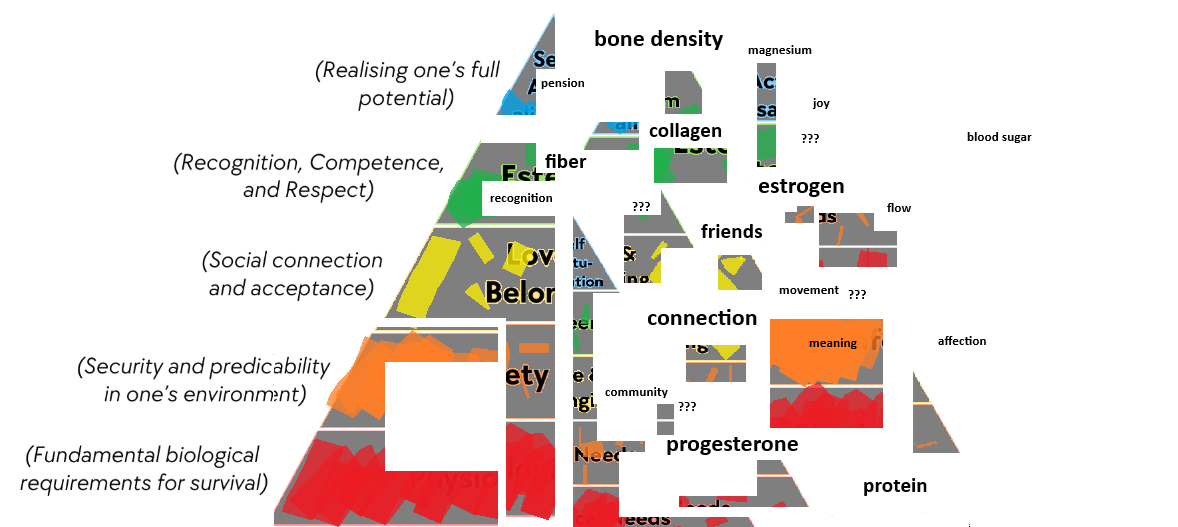
It doesn’t mean it cannot be shared, responsibility.
I am still unlearning lessons of archaic programming which pre-destined me to “make it” not further than their own perception of who I was to be (i.e. my needs estimated, not understood); lessons of choosing people who wanted to be met where they were, not halfway, not the other way around. Who not only knew exactly what they wanted, but would compromise none of it, and for no one (i.e. my needs ignored, not seen).
I know and understand that at this point of my life, I do not have the muscle trained in me, not just yet, to sustain a life of my own design (does anyone, really?). I have yet to wake up to a life in which showing up to it feels like a blessing, but I know that I am (blessed). I am eager for my life to be there already; but I have only just begun to see the road to it, to start building towards it, and some steps cannot be skipped. Some days, I simply don’t have the energy to get up, much less build. This is when I am learning to lean into my people. Hard as it is to ask for it, when I did, people showed up. Blessed, I am.
I was not alone when I was injecting myself with hormones, needles in my stomach. My sister would call each night and stay with me on the phone. My mother called after. My friends would listen to my rambling-ons about what’s happening to my body, were patient with me through a very emotional break-up. Even my neighbors who quickly became my friends, were there at least for coffee, or a walk around the block, or eating the meals I was learning to cook. All of this community, within my grasp once I learned to lean onto it.
My friend M. came to pick me up at the facility after the procedure, spent the day chatting and snacking, watching Twilight and celebrated the successful freezing of one egg.
A single little piece of my DNA, suspended on ice. My odds?
100% aligned.
Dashni,
Bubamarrë 🐞
Thank you to Maggie Oran for lending her editing expertise.
Thank you for reading through this rather intense piece. Your time and attention is truly appreciated. I hope you have gained something from these words, a sense of clarity, or even peace with your own needs and desires. I hope you give yourself permission to fulfill them.
In Albanian, hallë is a female relative on your father’s side, and teze is on your mother’s side.
Uncle + aunt.
If you are like me, and you were never educated enough on your own body’s reproductive system beyond its function to conjure new life, then I hope this video will be as enlightening for you as it was for me.
Wow. Thank you for sharing this beautiful and raw part of yourself with us.
We have very different lives (different cultures, identities, experiences) but I resonated with so much of your story. To live in the uncertainty of life. To not follow a blueprint that is laid out before you and to, piece by piece, build a life that feels true and supportive. To grapple with the expectations of others and of yourself.
"What a privilege and an honor to grow, and to choose; to have responsibility and the agency to design the life that feels right for me, and mine." I loved this reframe. How something that is sometimes so difficult and painful (life) can be seen as a blessing and all of those hard moments a privilege to bear witness to.
You are brilliant and I agree with your therapist! A lot of grace and a lot of grit. 💙
Couldn't agree more. This piece hits so close to home for so many women. It's a powerful reminder of invisible biological presures.